What You Need to Know about Adopting a Dog from a Shelter or Rescue
If you’re considering adding a new furry friend to your family, you may have thought about adopting from a rescue or local shelter. In your research, you probably noticed how many different adoption options there are. So…how do you know a rescue is “good” - ethical, conscientious, and transparent?
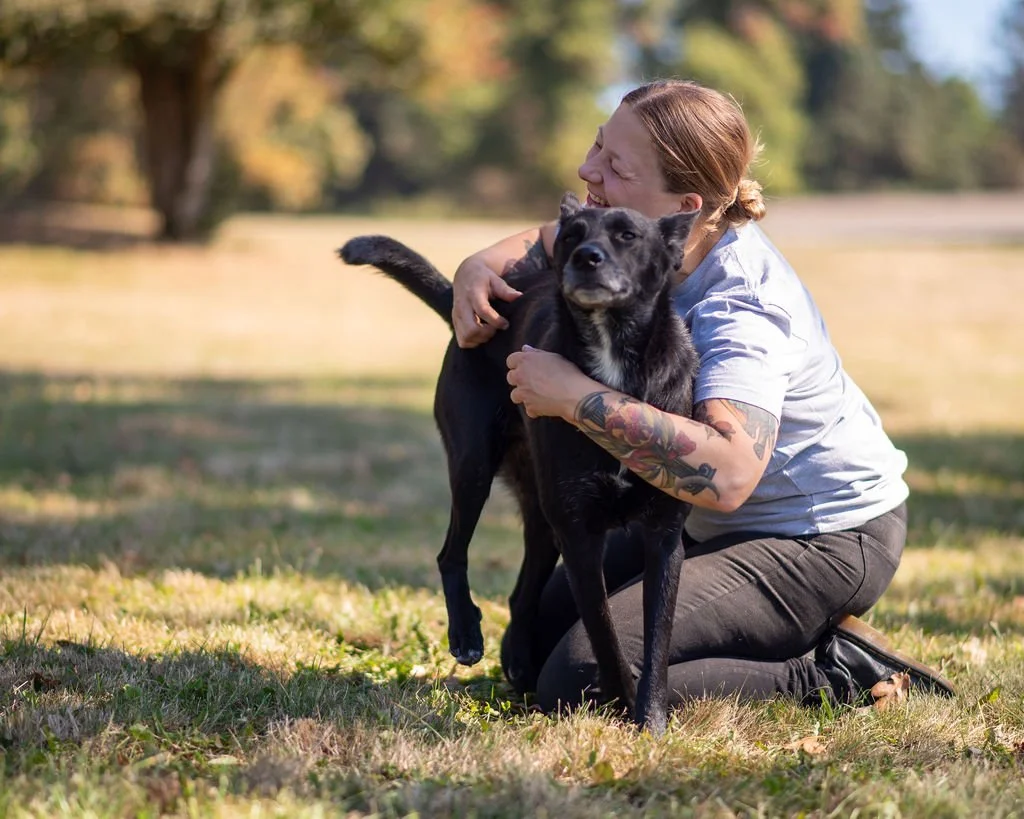
Me and my beautiful rescue dog Ozymandias, adopted from One Tail at a Time
First, if you are looking to adopt, it’s important to make really good choices around the dog you bring into your home. Those adorable pictures of dogs on the Internet you fall in love with and call the rescue about? They may not tell the whole story. As a potential adopter, keep in mind that shelters and rescues are motivated to move their dogs into homes - both for the sake of the dogs and to make room for the next intake. So while one would hope that adoption counselors will do their best to match a dog and the adopter, it is realistically often the responsibility of the adopter to make the right choice. In short, it will often be up to you to bring the right dog into your home even when working with an adoption counselor.
But what are the factors you should consider? First, you need to understand that there are two kinds of places that people can surrender their dog to - open and closed intake. There are no open intake rescues, by definition, but shelter can be both open and closed intake. Open intake shelters are organizations which are required to accept any dog into their care, meaning they are more likely to end up with dogs that have behavioral issues. Open intake shelters typically have contracts with their local cities or counties, which means that they are responsible for taking in all stray animals. And this in turn means that their adoption numbers may not be as good because some dogs may not be fit to be adopted out.
You may also have heard about “no kill shelters” - which sound like such a wonderful idea. But what does “no kill” actually mean? Simply put, it refers to an organization has a live release rate of at least 90%. Many folks with kind hearts really love this idea and think that shelters that are not no-kill are terrible places where staff is just killing animals for the fun of it. But the reality is different. It is an issue of resources, not ethics. In addition, open intake shelters may receive dogs with more intense behavioral issues who cannot safely be adopted out.
Here is an example from Oregon: The Oregon Humane Society is a closed intake shelter. It far exceeds that threshold of 90% - last year's LRR was 97% which is incredible. But they don’t call themselves no-kill - because they know how divisive that term is. The Humane Society of SW Washington and Multnomah County Animal Shelter both have live release rate in the high 80s. But they aren’t doing sheltering differently or badly. They both have county contracts, so the population of dogs is literally different than that at the Oregon Humane Society.
Rescues are what is called “closed intake.” This means they get to choose which dog they accept and may skip over dogs with certain behavioral issues. Naturally these organizations end up with dogs that are much easier to place. On the other hand, these types of rescues may have “more adoptable” dogs and thus higher numbers of adoptions. Adoption numbers are often tied to finances, so this is an important point to keep in mind - and this brings us back around to why some adoption counselors may not err on the side of caution when it comes to matching adopters and adoptees.
Rescues often have a specific focus for the animals they take in. For example, there are rescues dedicated to specific breeds, senior dogs, medical cases, special-needs dogs, and more. If you are looking for a specific breed of dog, seeking out a rescue that specializes in this breed is a good idea.
Going beyond the organizational level, it is best to support a rescue organization that commits to force free training methods, which means that the dogs in their care receive positive reinforcement based training and will not be subjected to correction or training collars, such as shock, prong, or choke. This is especially important because rescues often come from troubled backgrounds, so adding aversive based training into the mix can be even more detrimental for them than for a securely attached dog from a harmonious home. (Needless to say, I don’t think aversive training tools should be used in dog training at all - and you may already agree because you’re following this blog.)
When it comes to how dogs are housed with the rescue, there are both shelter as well as foster based rescues. When dogs live in a shelter situation, they are housed at a facility with a large number of other dogs, which can be a pretty stressful situation. Is it all bad? Not necessarily. If a dog does well in a shelter environment, this gives you a lot of information about their resilience in difficult situations. However, many - if not most - dogs simply “shut down” in a shelter environment, which means they may seem perfect but later turn out to be any flavor of “reactive” or overexcited. My friend Hannah’s dog Lucy, for example, was described as “shy and sensitive” by the shelter but later turned out to be reactive to a variety of things, for example people. Luckily, Lucy lives with a great trainer, but not everyone has that kind of toolbox to draw from.
Dogs in a foster setting, on the other hand, often come with more data on how the dog will do in a home setting, which is a definite plus. At the same time, if the foster lives in a remote area or does a great job managing the foster dog’s life to minimize stress, you may not be able to glean how the dog does in more high pressure situations and therefore find that your new furry friend is different from what the foster described. In short, both living situations give you limited amounts of information, though a foster-based rescue will likely give you a clearer picture.
Not all rescues can offer all services for a variety of reasons, but here are a few extra cool features a rescue may have and a short description of what they can do for you. A limited number of rescues offer a foster to adopt option. This means that you can foster a dog and then decide to keep them if they’re a good fit for your household. This modality allows you to truly see if the dog can live well in your home and has the traits you are looking for in a companion dog.
Next, while not feasible for every shelter or rescue, finding an organization that offers post adoption support is amazing. I adopted my dog Ozymandias from One Tail at a Time PDX and was paired with a behavior consultant who helped us through a variety of issues to set everyone up for success. Pretty amazing service, if you ask me.
One really, really important thing to keep in mind for those of you who already own another animal is to ensure that your new dog is compatible with your already existing furry companions and children. This is especially critical when it comes to the new dog living with cats - and your actual flesh and blood kiddos. I strongly recommend only adopting a dog who has successfully lived with cats or children in a foster situation or prior home. If there’s no data, then you may get lucky and end up with a dog that does well with your cat. But you may also end up with a split home or, even worse, a hurt cat or scared child, which can lead to the dog being returned or worse.
Whew. That’s a lot to consider, isn’t it? A final tip for those of you wanting to adopt your dog from a shelter is to volunteer at the organization you’re looking to adopt from. This way, you will get a feel for how the organization works and you will be able to meet the dogs that come through and get a much clearer picture of them. And just like with anything that requires consent, a good rule of thumb is this: if it’s not a hell yes, then it’s a no - no matter how cute the picture on the Internet is.
This blog was created with the help of Hannah Blumenfeld of Pup Star Training in Beaverton, OR. Hannah has been volunteering with and working for a variety of rescues in the area, for example Born Again Pit Bull Rescue, One Tail at a Time, and the Humane Society for Southwest Washington . With all this experience under her belt, she is well qualified to dispense some valuable tips when choosing a rescue to work with.